Your best wholesale account emails over a purchase order on a Friday afternoon — a PDF attached to a forwarded reply chain, with a handwritten note in the body asking you to 'use last month's pricing.' By Monday, three people have touched it, none of them in the same system, and the order still isn't confirmed.

That's B2B ecommerce in practice for most mid-market distributors and manufacturers. Not a clean checkout flow. A tangle of channels, relationships, and exceptions that no consumer-grade platform was built to handle.

## What B2B Ecommerce Actually Means in 2026

B2B ecommerce is the digitisation of how business buyers discover, configure, price, and place orders with their suppliers — and how sellers manage those orders from intake to invoice. The definition sounds simple. The execution rarely is.

By 2026, buyer expectations have shifted hard. Procurement managers at construction firms, agricultural co-ops, and machinery distributors now expect the same order visibility they get from consumer platforms: real-time stock, order status without a phone call, and account-specific pricing visible before they commit. Gartner research suggests that 80% of B2B sales interactions between buyers and suppliers will occur in digital channels by 2025 — a threshold most mid-market sellers haven't crossed yet.

The gap isn't ambition. It's architecture. Most available platforms are either thin storefronts bolted onto an ERP, or heavyweight legacy suites that take 18 months to configure and still require a developer for every pricing rule change.

## Why the Intake Problem Is Harder Than It Looks

Even when a seller deploys a proper B2B portal, a significant share of orders still arrive the old way. A roofing materials distributor might push 60% of volume through a portal — and still receive the remaining 40% by email, fax, or a spreadsheet a contractor built in 2019 and refuses to abandon.

Ignoring those channels isn't an option. Forcing buyers to change their habits loses accounts. That means any credible B2B ecommerce strategy has to handle structured portal orders *and* unstructured real-world intake — and route both through the same operational logic without creating two separate workflows for your ops team.

Order entry errors from manual re-keying average around 1–3% per line in high-volume environments. At scale, that's credit notes, production delays, and customer service hours that compound fast.

**FAQ: B2B Ecommerce Basics**

*What is the difference between B2B and B2C ecommerce?*
B2B ecommerce involves negotiated pricing, account-specific terms, approval workflows, and high-volume repeat orders — none of which standard B2C platforms handle well.

*Do B2B buyers actually want self-serve ordering?*
Yes — but selectively. Buyers want self-serve for routine reorders and status checks. They still want a human for complex configurations or disputes. Good B2B platforms support both.

*What is an Order Management System (OMS) in B2B ecommerce?*
An OMS sits behind the buyer-facing portal and manages the full order lifecycle: intake, validation, approval routing, fulfillment, and invoicing. Without one, portal orders still require manual handling.

## The Approval and Configuration Problem No One Talks About

Account-specific pricing is table stakes. The harder problem is approvals. A food wholesale distributor with 200 active accounts might need margin-based approval thresholds for one customer segment, automatic release for another, and a sales rep sign-off for any order from a new account placed outside business hours.

Most platforms treat this as a custom development project. It shouldn't be. Configurable rule engines — reused consistently across pricing, validation, routing, and approvals — are what separate operational platforms from glorified catalogues.

## How Vendordesk Helps Mid-Market Sellers Close the Gap

Vendordesk is built specifically for the scenario described above: a buyer-facing portal backed by a full Order Management System, in one product, without stitching together three vendors.

- **Unified portal and OMS**: buyers order through a modern self-serve portal; every order flows directly into the same system managing fulfillment and invoicing — no re-keying, no middleware.
- **Messy intake handling**: email orders, PDF attachments, Excel files, and even sketched forms are ingested, parsed, and staged for human review before touching live data — reducing manual entry errors to well below 1%.
- **Human-in-the-loop by design**: no order is auto-committed from an unstructured source. Ops staff review AI-extracted data before it hits the workflow.
- **Hybrid AI architecture**: sensitive pricing and customer data stays local via Ollama; only anonymised or metadata tasks use public AI models — a meaningful distinction for mid-market sellers with contractual data obligations.
- **Per-customer configuration without code**: approval thresholds, pricing rules, and order routing are configured through a shared rule engine, not one-off developer sprints.

## The Practical Takeaway

B2B ecommerce in 2026 is not about having a portal. It's about having a portal that connects to real operational control — and that can absorb the messy reality of how your buyers actually send orders today. Sellers who close that loop will reduce ops overhead, retain accounts that might otherwise defect to better-served competitors, and stop losing margin to avoidable entry errors.

The platform question isn't 'do we go digital?' It's 'can our digital setup handle Monday morning?'

Try Vendordesk free and see how it handles your real order mix — including the ones that arrive as PDF attachments on a Friday afternoon.
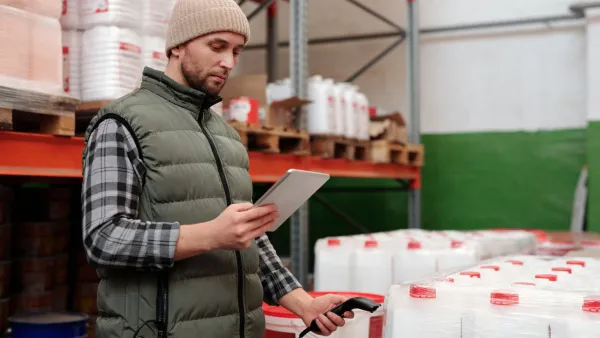
Photo by Vitaly Gariev on Pexels