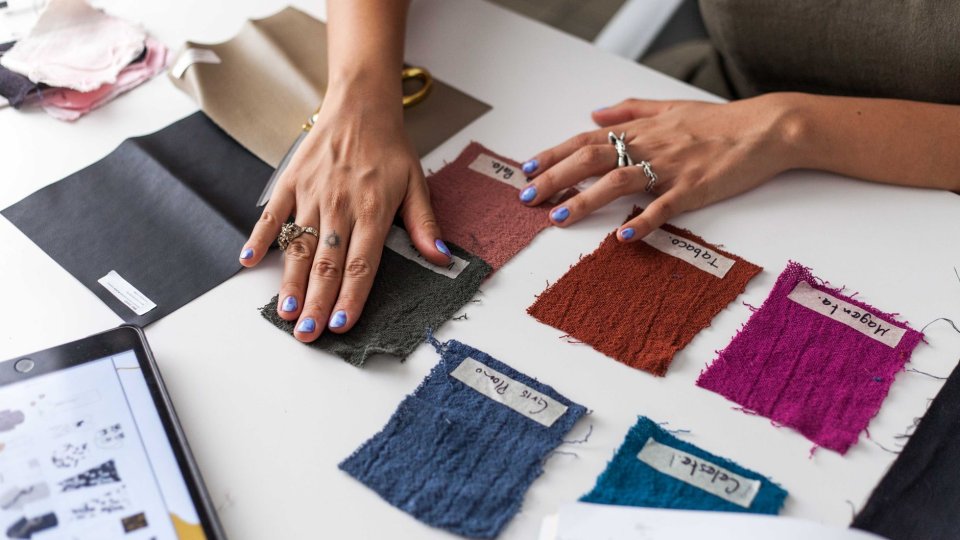
A buyer for a mid-size boutique chain sits at a trade show stand, lookbook open, pen in hand. She wants twelve colorways of the new linen blazer — sizes XS through XXL — split across three delivery windows tied to your spring drop schedule. Your sales rep is writing it down on a notepad. Back at the office, someone will re-key it into a spreadsheet, then into your system, then chase the buyer three days later to confirm the quantities were right. One of those handoffs will introduce an error. It usually does.

That is the daily reality of fashion wholesale order management — and it is why generic B2B software keeps failing the industry.

## Matrix ordering is not a feature most platforms were built for

In fashion wholesale, a single SKU is rarely a single SKU. A jacket is a grid: six sizes by eight colorways, forty-eight combinations, each with its own stock position and minimum order quantity. Buyers don't think in flat line items — they think in runs. They fill a matrix and expect the system to handle the arithmetic.

Most B2B ordering tools were designed for simpler catalogs: a part number, a quantity, a price. Asking them to handle a size-color matrix means building workarounds — separate line items per variant, manual subtotals, offline spreadsheets sent back and forth by email. Each workaround is a new place for errors to enter. Brands that sell across ten to twenty seasonal styles with full size runs report order entry error rates of 3–5% when relying on manual re-keying. Those errors become returns, credit notes, and strained retailer relationships.

## Lookbooks should do more than inspire — they should close orders

Fashion brands invest heavily in collection presentation. The lookbook is the sales tool. But in most wholesale workflows, the lookbook and the ordering process are completely disconnected: buyers browse a PDF, then switch to an email or a portal that looks nothing like the brand, to place an order against a flat product list that strips out all the visual context.

That disconnect creates friction at exactly the moment buyers are most engaged. A retailer who loved the collection at the trade show booth loses momentum when the ordering experience feels like filing a tax return.

**FAQ: How should a B2B portal handle fashion wholesale ordering?**

*Q: Can buyers order directly from a digital lookbook?*
A: Yes — a well-configured B2B portal ties product imagery and collection context directly to the ordering interface, so buyers select and commit in one flow rather than switching between a catalog and a separate order form.

*Q: How does matrix ordering work in a B2B portal?*
A: The portal presents a size-color grid per style. Buyers enter quantities across the matrix, see running totals by size and colorway, and submit the full run as a single structured order — no line-item workarounds required.

## Buyers don't order on your schedule — and that's a good thing

Retail buyers place orders when it's convenient for them: Sunday evening before the week gets busy, on a flight home from a trade show, or at 11pm after reviewing open-to-buy budgets. If your ordering channel is a sales rep's inbox, you capture the orders that happen during business hours. You miss the rest, or you get them as informal messages that still require manual entry.

Self-serve ordering through a branded portal removes that bottleneck. It also removes the re-keying step entirely — orders come in structured, not as PDFs attached to forwarded emails.

## How Vendordesk helps fashion wholesalers manage collection complexity

Vendordesk is built for exactly this kind of structured complexity. Specific capabilities relevant to fashion wholesale:

- **Matrix ordering interface** — buyers enter quantities across size-color grids per style; the portal calculates totals and validates against minimums before submission.
- **Visual catalog with ordering built in** — product pages carry full collection imagery and colorway swatches, so the browsing and buying experience stay connected.
- **Delivery window splits** — buyers can allocate quantities across multiple delivery dates within a single order, matching how seasonal drops actually work.
- **Messy-channel intake** — orders arriving as PDFs, Excel files, or email attachments are ingested and staged for human review before touching live data, so nothing falls through the cracks during trade show season.
- **Per-customer configuration** — pricing tiers, minimum order values, and visible assortments can be set per account without writing custom code.

Collection drops happen once. The order window is short. Losing orders to process friction is a cost you can measure — and avoid.

Try Vendordesk free for 14 days and see how a portal built for wholesale complexity handles your next collection launch.
Photo by Los Muertos Crew on Pexels